
Graphene Lighting
Graphene Based Light Source
The invention relates to a novel white, quasi-solar light source to lighting applications. The Broadband White Light is produced on the porous form of graphene – graphene foam as a result excitation by focused laser diode beam. We demonstrate that bandgap opening and light emission from graphene based materials are possible using continuous-wave laser beams with wavelengths from UV (360nm) or the visible (405nm) to the near-infrared range (980nm-1064nm). The active optical material is closed in glass bulb in vacuum conditions. The spectrum of light in visible range is similar to spectrum of sun which is advantageous to comfort of people staying in lighted room and to color fidelity of lighted objects. The laser induced white emission on graphene foam is characterized by the threshold dependence and increased exponentially with the increasing power density of incident laser. The One Watt of laser energy is enough for typical lighting application at a small room.
Demonstration Tools of Graphene White Light
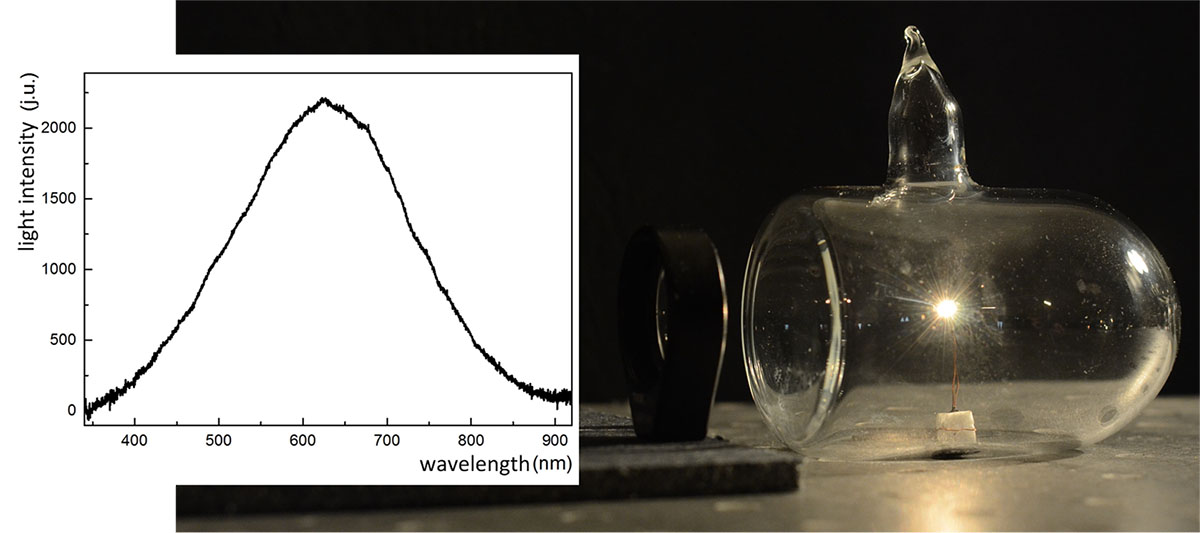
White-light emission from graphene and spectral intensity induced by focused infrared laser.
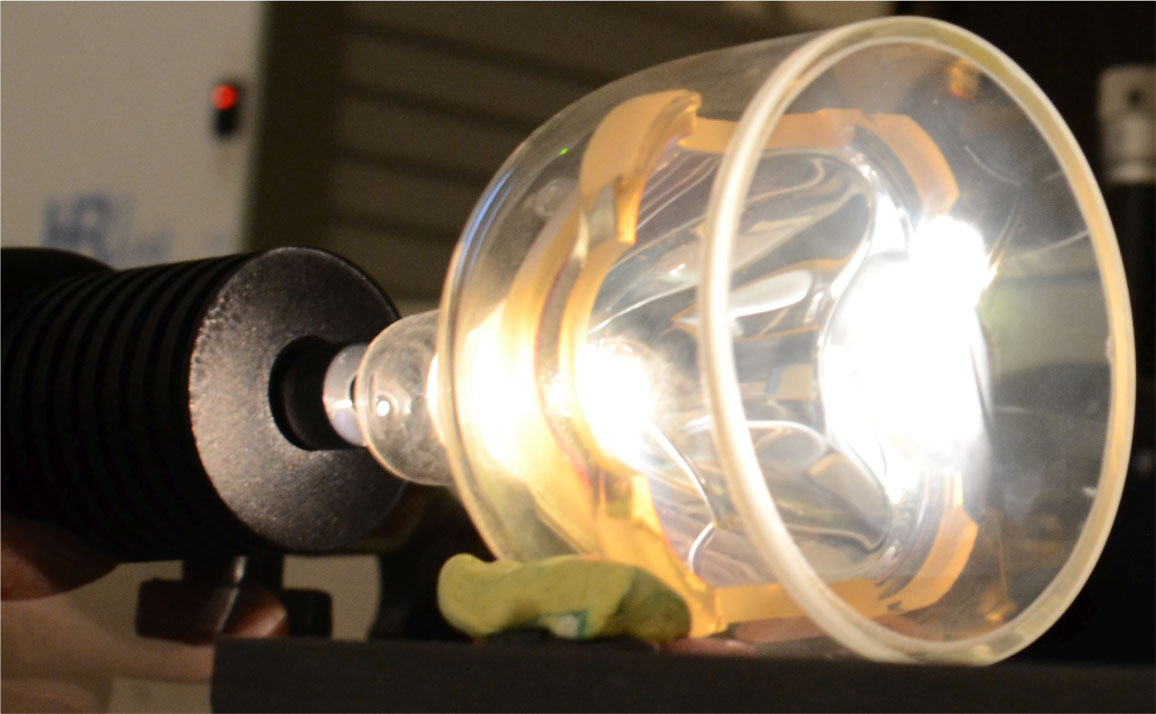
White light lamp with parabolic reflector.
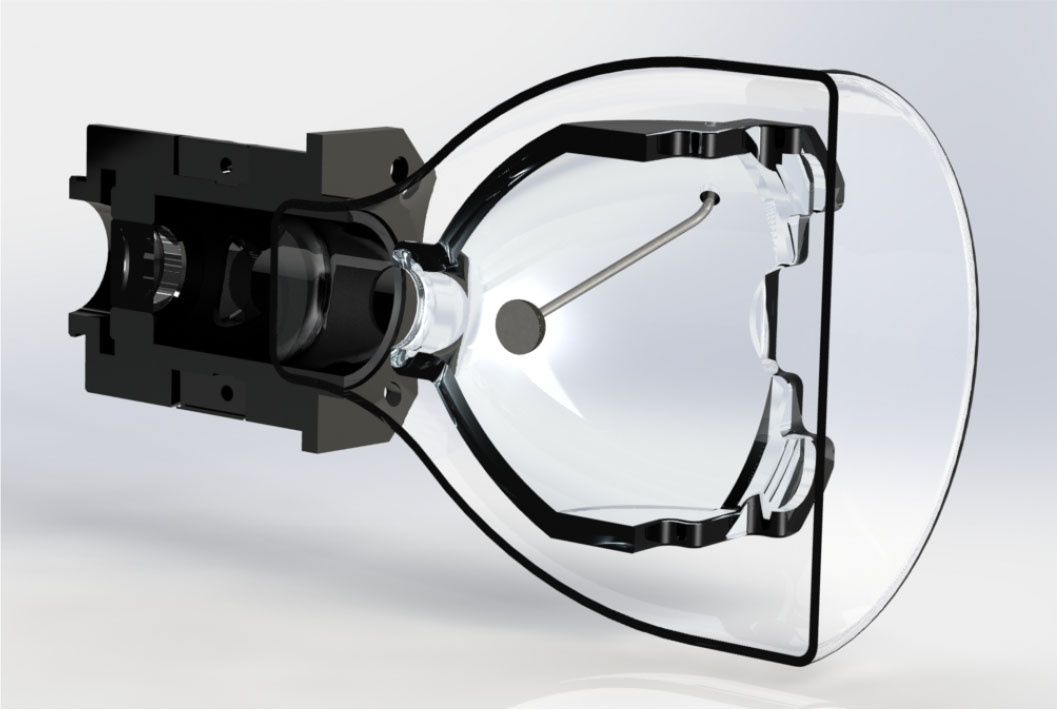
3D rendering model and the Lamp Cross section.
The following are the fields of research: graphene based materials (areogels and composites), high efficiency emission, full-spectrum light, field electron emission, infrared absorption and other.
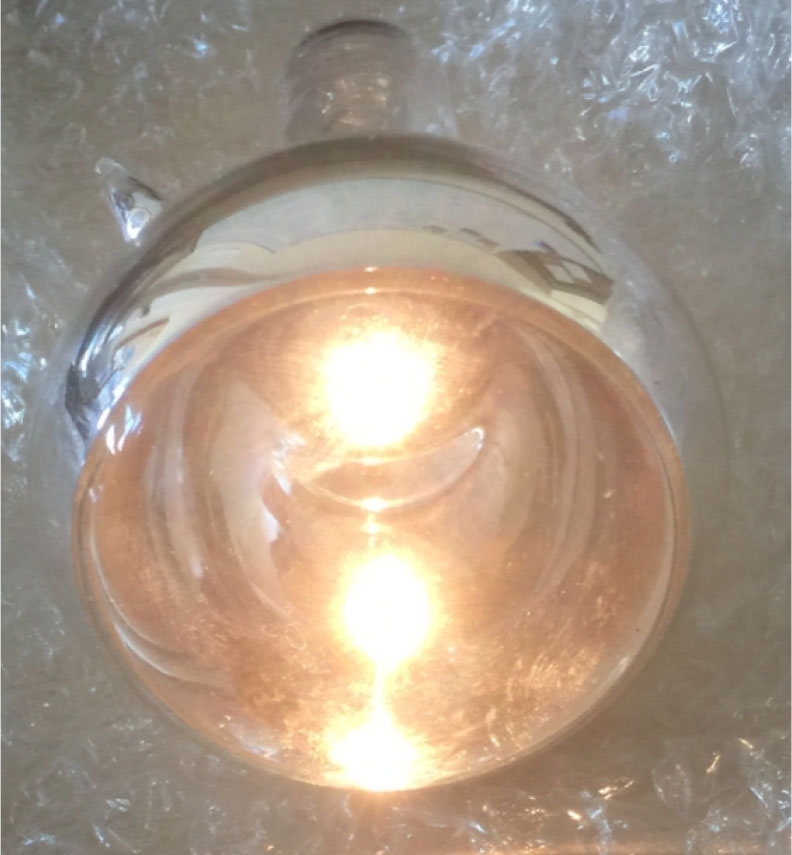
Compact lamp with integrated reflector
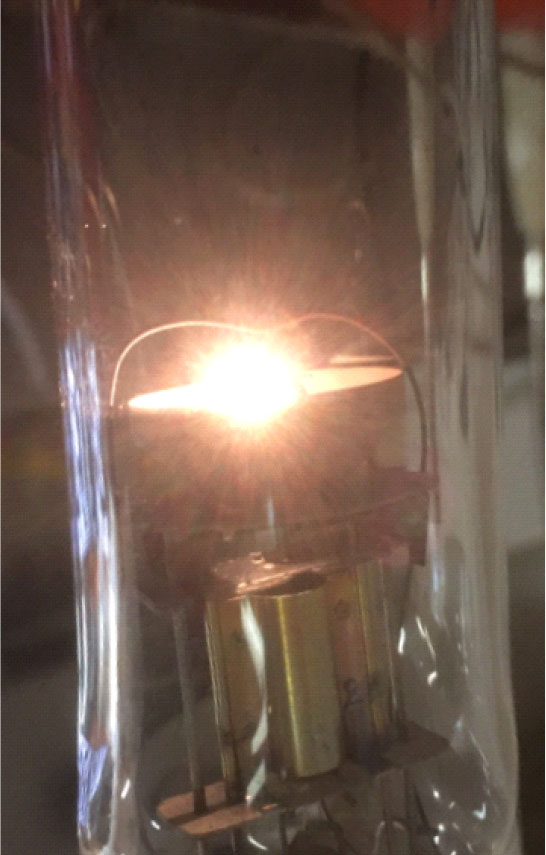
Vacuum electron tube
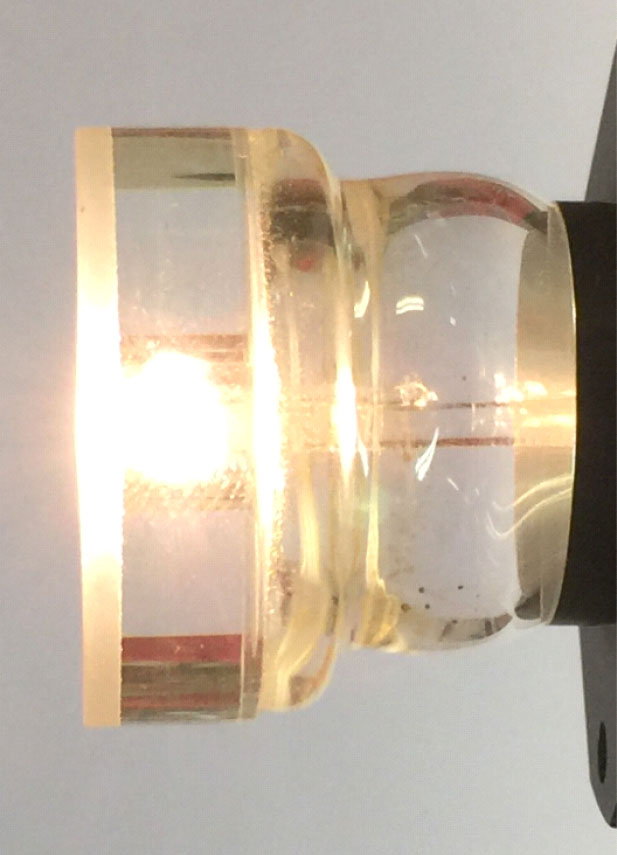
Single dot of vacuum dispalay
The Graphene Light Main Advantages
1. The spectrum of light in visible range is similar to spectrum of sun.
2. Ecologic light source (does not contain any of heavy metals and rare earth metals).
3. High efficient emission compared to other known lighting technique.
4. Highest lightbulb efficiency more than 200 Lumen/Watt.
5 Cheap cost of graphene foam production.
6. High Color Rendering Index (>99).
7. Broadband Warm White Colour.
8. Long lifespan (>10 000 hours, only laser depend).
9. Ambient temperature has no effect on luminance efficiency.